Container Loading

Interactive load plans with our sea container calculator

Start a free trial
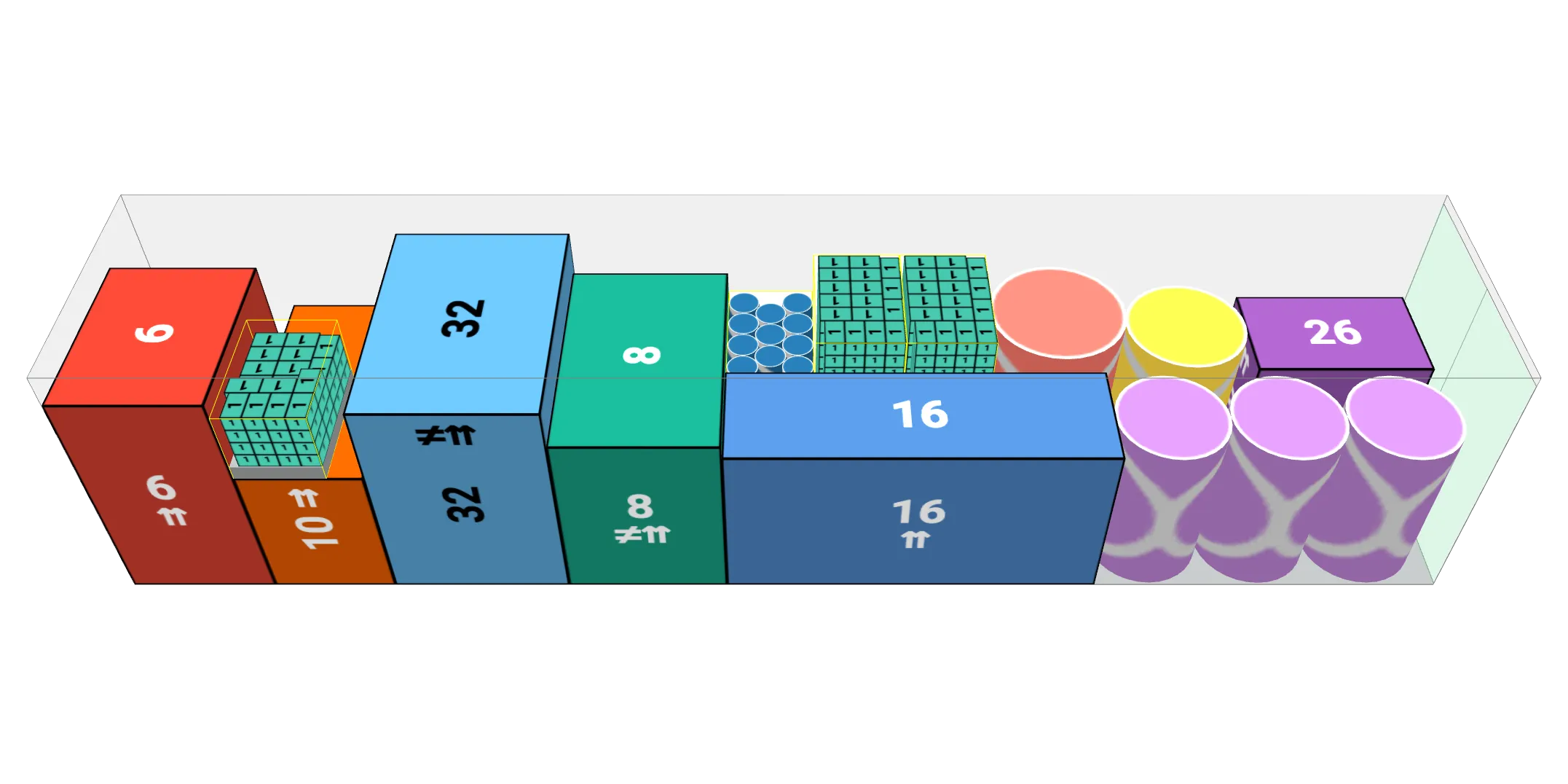
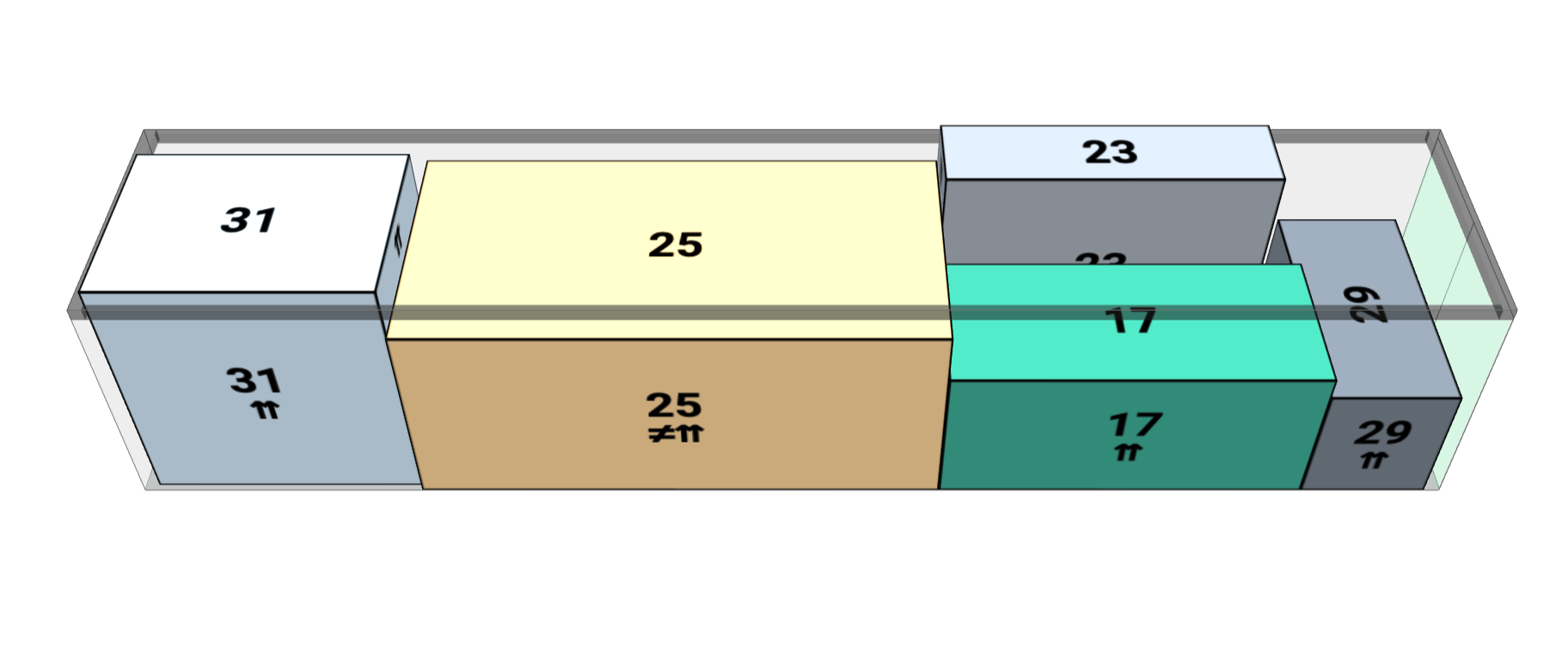
40hc with mixed items
kn company logo
cmacgm company logo
maersk company logo
nippon company logo
dsv company logo
yusen company logo

How many units fit in your container?

Enter your cargo's length, width, height and weight, pick a container, and see exactly how many fit - rendered in 3D.

Cargo Planner load planning software has been a great fit for our international container shipping operation's needs. We find the program to be very simple, customizable, and easy to use. The developers are extremely helpful and supportive when addressing our specific needs.

Brian Winkelman | International Operations Manager, La-Z-Boy Inc

Mixed containers

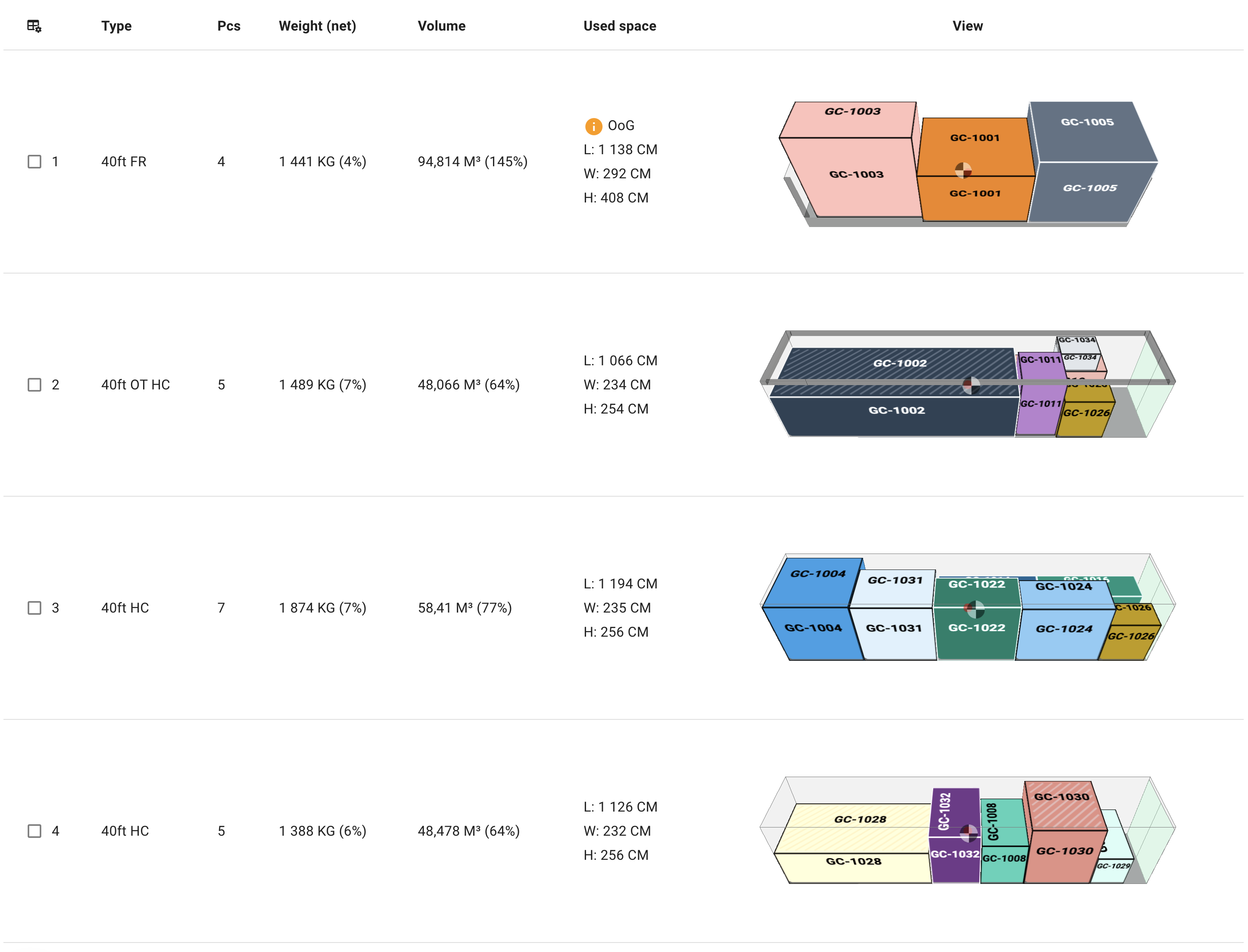
You select what kind of equipment is available from our library - and Cargo-Planner will select the best combination of containers. Which containers gets used are based on factors like used volume, payload and custom rules. You can also assign costs per container type which lets the tool choose the most cost effective setup

/_astro/optimization with mixed containers

Prioritize Center of Gravity

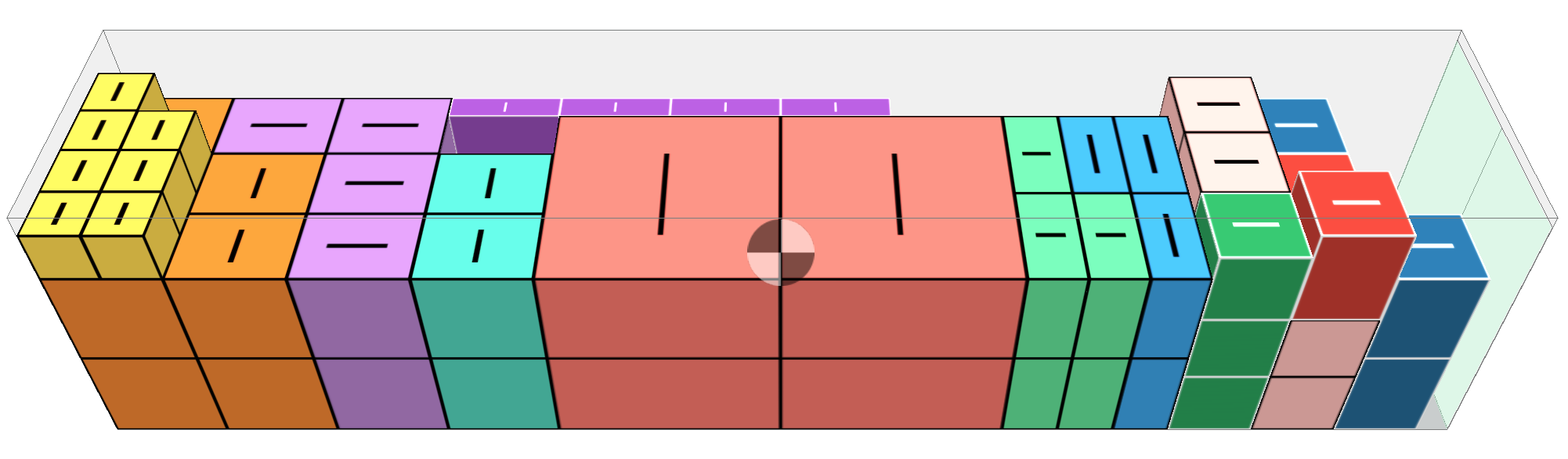
The stability of the container can be improved by prioritizing the Center of Gravity (CoG) when loading your cargoes. This feature will make sure that Center of Gravity will be within 10% from the center of the container. See the load settings reference.

/_astro/prioritize center of gravity

Load on Flat racks

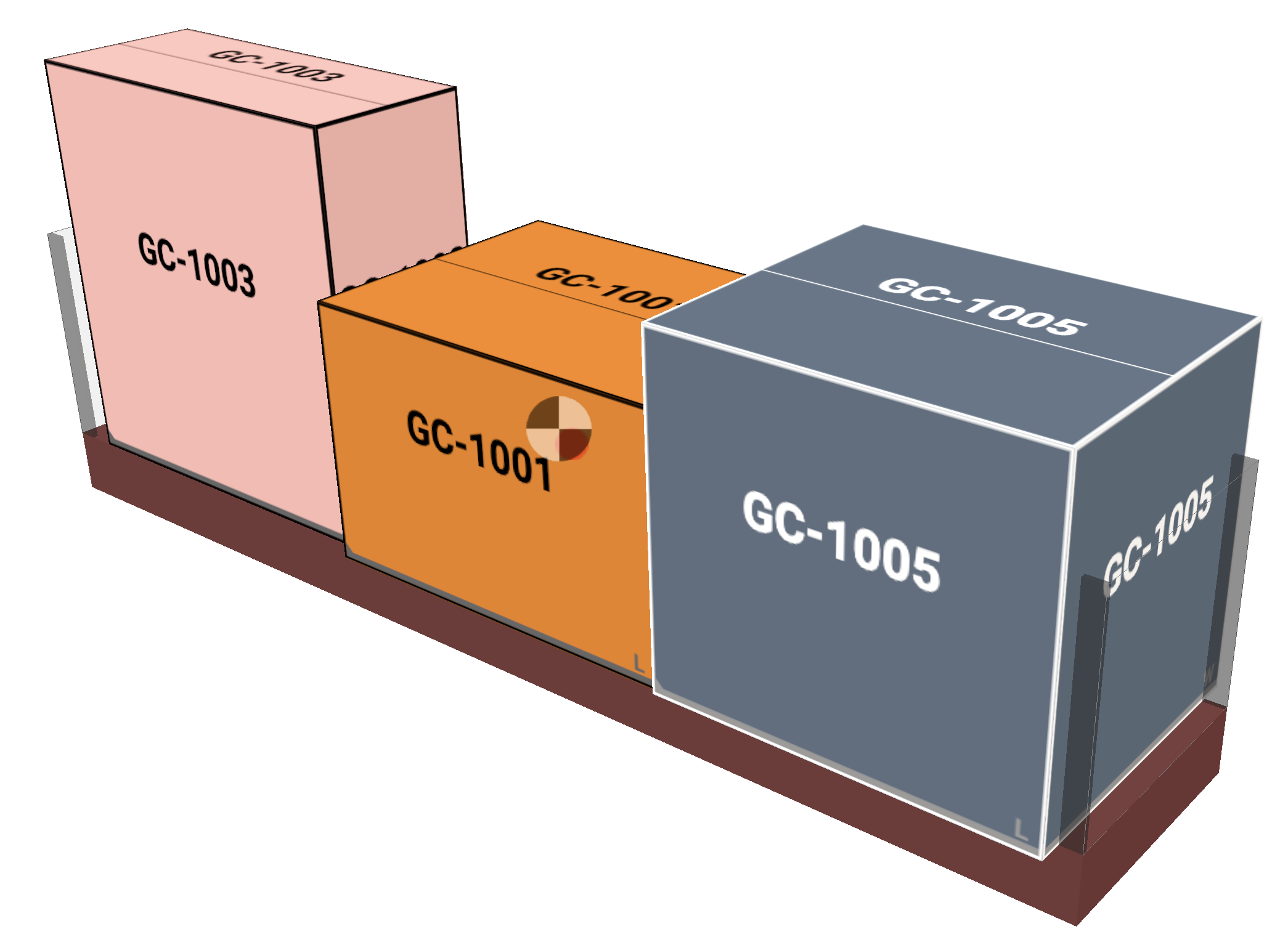
Do you have Out of Gauge cargoes? With Flat Rack containers, platforms and MAFI's you can load overwidth and overheight cargoes, at the same time as the Centre Of Gravity will be taken into consideration. You can easily create your own custom containers with corner posts and walls. Perfect for Project cargo shipments.

/_astro/flatrack with oversized cargoes

Load on Open tops

Use our Open top containers (or create your own) to load cargoes too tall to be loaded into normal dry van containers. Cargo Planner will automatically select the most appropriate containers. If a container does not have an open roof or open walls, the tool will not load cargoes that cannot be loaded through the provided door size

/_astro/opentop with tall cargoes

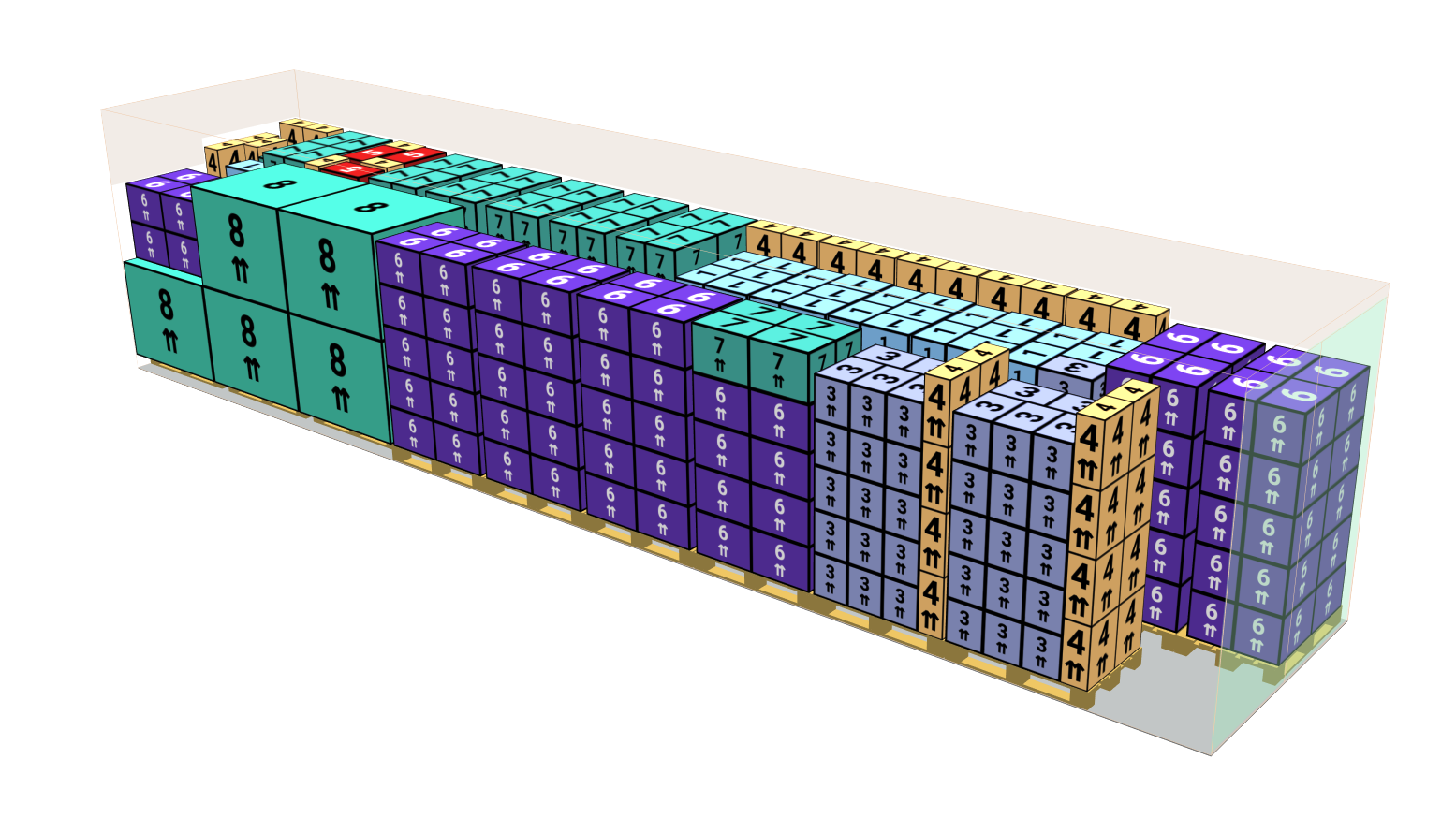
Load with pallets

If your cargoes are not palletized, you can select a pallet type and then load your cargoes on pallets before loading them on containers, trailers (or even other pallets!).

You can even load "out of gauge" cargoes on pallets.
/_astro/container with pallets

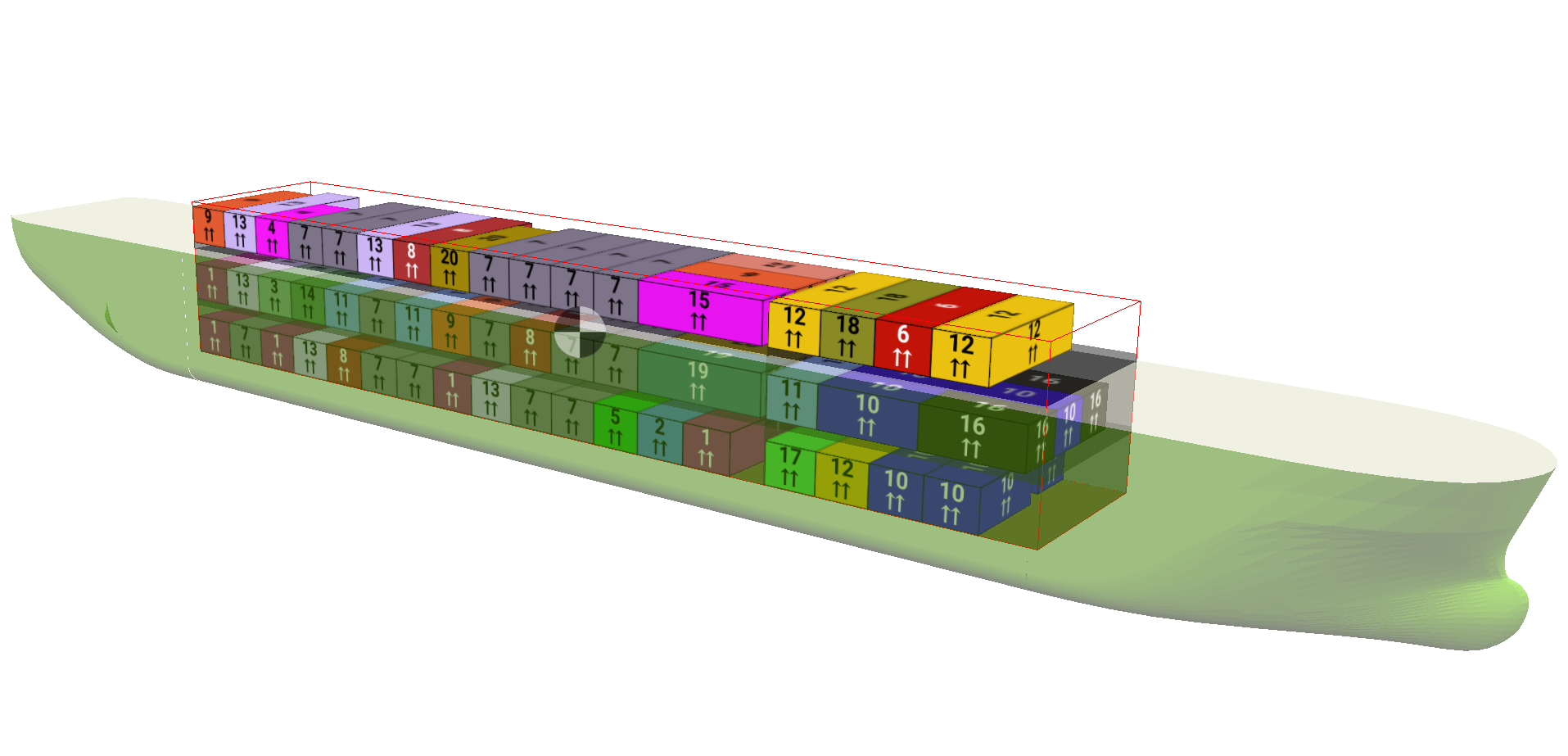
Breakbulk vessels

You can easily design custom vessels by selecting and combining sets of cargo holds, tween decks and benches. Whether you're transporting heavy machinery or oversized cargo, our software will load all cargoes instantly. Create your breakbulk vessel today with our Set Builder.

/_astro/vessel with tween decks

Utilize containers better and plan faster

Cargo-planners benefits are accessible at first use and allows you to

Save money

Load more cargoes in your containers and increase efficiency.

Save time

Thousands of cargoes, multiple containers - it usually takes a few seconds to create your load plan

Gain Clarity

With our 3D-visualizations, you and your stakeholders can see, edit and share clear information.

Save environment

Reduce the number of trucks used to ship your boxes - a direct positive impact on the environment

Planning and coordination from the start to the end of the project! In order to determine the required shipping space and/or container requirements for our projects as precisely as possible in advance, we have been successfully using Cargo-Planner for many years.

j
Philipp-Christopher Ebbo Schopnie, Branch Manager, EMS Log GmbH

What is container loading?

Container loading is the process of deciding how a shipment is arranged inside a shipping container: which cargo goes in which container, where each item sits, which way round it faces, and what stacks on top of what. Done well, it fills the container to the limit that actually binds - volume, payload, or the door opening - while keeping the load stable enough to survive the voyage. Done badly, it ships air, or it ships damage.

A container loading calculator turns that from a judgement call into a computation. You give it your cargo list and your available equipment, and it returns a load plan: a 3D arrangement, a container count, and step-by-step instructions the people doing the physical stuffing can follow.

The three limits that decide a load

Almost every container ships out constrained by one of three things, and knowing which one is binding tells you what to change.

Volume

The container runs out of space before it runs out of weight. Typical for light, bulky goods - furniture, packaging, empty containers-within-containers. The lever here is geometry: better orientation, tighter stacking, or a taller high-cube container.

Payload

The container hits its maximum weight with space to spare. Typical for dense cargo - machinery, liquids, tiles, paper. Adding volume-efficiency gains you nothing; the answer is usually splitting the load across more containers, or moving to equipment with a higher payload rating.

The door opening

The most commonly missed one. A container's door is smaller than its interior, so cargo that fits inside on paper may not be able to get in. Over-height or over-width pieces need an open top or a flat rack, where the cargo is loaded from above or from the side instead of through the doors.

Why stability matters as much as fit

A container that is packed full but badly balanced is a problem in transit. Weight concentrated at one end shifts the centre of gravity away from the middle, which affects how the container behaves when it is lifted by crane, sits on a chassis, and is stacked on a vessel. Some ports and carriers will refuse a container whose centre of gravity is too far off-centre.

The same applies inside the load. Heavy items belong at the bottom, lighter items on top, and cargo that cannot take weight on it needs to be marked as such so nothing gets stacked onto it. These are constraints a spreadsheet cannot check for you and a person doing it by eye will eventually get wrong on a busy day.

Cargo-Planner applies all of this automatically - it keeps the centre of gravity within tolerance, respects stacking and orientation rules per item, and checks that everything it loads can physically get through the door of the container it assigned it to.

Shipping container dimensions

Internal dimensions, capacity and maximum payload for the container types used in most sea freight. These are the same figures Cargo-Planner loads against, taken from our equipment library - so a load plan you build uses exactly the numbers you see here.

Internal dimensions vary between manufacturers and build years. Treat these as the standard values to plan with, and check the container's CSC plate when a few centimetres decide whether the cargo fits.

Standard dry containers

The general-purpose boxes that carry the majority of containerised freight.

Container Internal L × W × H Capacity Max payload
20ft DV 5.85 × 2.35 × 2.40 m 19.2 × 7.7 × 7.9 ft 32.9 m³ 1,163 ft³ 20,000 kg 44,092 lbs
40ft DV 12.03 × 2.35 × 2.40 m 39.5 × 7.7 × 7.9 ft 67.7 m³ 2,391 ft³ 22,000 kg 48,502 lbs
40ft HC 12.03 × 2.35 × 2.70 m 39.5 × 7.7 × 8.9 ft 76.3 m³ 2,696 ft³ 25,000 kg 55,115 lbs
45ft HC 13.56 × 2.35 × 2.70 m 44.5 × 7.7 × 8.9 ft 86.1 m³ 3,040 ft³ 26,000 kg 57,320 lbs

Refrigerated (reefer) containers

Insulation and the cooling unit cost internal space - a reefer is always smaller inside than the dry container it is derived from.

Container Internal L × W × H Capacity Max payload
20ft RF 5.45 × 2.28 × 2.16 m 17.9 × 7.5 × 7.1 ft 26.8 m³ 947 ft³ 22,000 kg 48,502 lbs
40ft RF 11.56 × 2.28 × 2.25 m 37.9 × 7.5 × 7.4 ft 59.3 m³ 2,094 ft³ 27,700 kg 61,068 lbs
40ft RF HC 11.59 × 2.29 × 2.42 m 38.0 × 7.5 × 8.0 ft 64.4 m³ 2,273 ft³ 29,400 kg 64,816 lbs

Open top and flat rack

For cargo that is too tall or too wide to go through a standard container door.

Container Internal L × W × H Capacity Max payload
20ft OT 5.89 × 2.35 × 2.38 m 19.3 × 7.7 × 7.8 ft 33.0 m³ 1,164 ft³ 28,000 kg 61,729 lbs
40ft OT 12.03 × 2.35 × 2.38 m 39.5 × 7.7 × 7.8 ft 67.3 m³ 2,376 ft³ 22,000 kg 48,502 lbs
40ft OT HC 12.03 × 2.35 × 2.68 m 39.5 × 7.7 × 8.8 ft 75.8 m³ 2,678 ft³ 22,000 kg 48,502 lbs
20ft FR 6.04 × 2.44 × 2.23 m 19.8 × 8.0 × 7.3 ft 32.8 m³ 1,159 ft³ 42,000 kg 92,594 lbs
40ft FR 12.05 × 2.44 × 2.23 m 39.5 × 8.0 × 7.3 ft 65.5 m³ 2,313 ft³ 40,000 kg 88,185 lbs
40ft PL 12.20 × 2.35 m 40.0 × 7.7 ft 49,000 kg 108,026 lbs

Need a size that isn't listed - a 53ft rail container, a roll trailer, or your own custom box? The full equipment library has every type Cargo-Planner ships with, and you can build your own container when your equipment doesn't match a standard.

Frequently Asked Questions

How many pallets fit in a 20ft or 40ft container?

What is the difference between a 40ft and a 40ft high cube container?

What can I do when cargo is too tall or too wide for a container?

Why does the centre of gravity matter when loading a container?

Can I plan several containers of different types at once?

Do I need to install anything to use the container calculator?