The load will not fit inside the legal envelope, the quote is due this week, and nobody has decided which trailer it goes on yet.
Moving out-of-gauge cargo by road
Updated August 19, 2026

Jens Brauer
Software Engineer, MSc Engineering (Production & Logistics)
A 62-tonne transformer, 4.2 m across the base, moving from a quayside to an inland substation. Three borders, two permit authorities, and a bridge on the last thirty kilometres with a posted axle limit.
Nothing about this is a packing problem. The freight fits on a low-boy with room to spare. What decides whether the move happens on schedule is a sequence of six decisions, each of which changes the ones after it — and every one of them has to be made before you can quote the job, not after.
This page walks that sequence in the order a planner actually hits it.
Start with the envelope, not the trailer
Four numbers decide everything downstream: length, width, height and weight. Each one collides with a different limit, and they are not interchangeable.
Width and height run into the legal travelling envelope — how large a load can be before it needs a permit and an escort. Length runs into the trailer, and sometimes into whether the trailer can be physically extended. Weight runs into two ceilings at once: the gross vehicle limit, and the far less forgiving limit on each individual axle group.
The mistake worth avoiding here is treating “oversized” as one property. A load can be legal on width and illegal on height, or comfortably inside every dimension and still illegal because 62 tonnes sat too far forward. They are separate constraints with separate fixes, and the order you resolve them in matters.
Choosing the deck
Height is usually the first real constraint, because it is the one you cannot negotiate with by rearranging anything. The legal travelling height is measured from the road, so the only variable you control is how high the deck sits.
That is what step-decks, low-boys and drop-decks exist for: they lower the loaded floor to buy back headroom you would otherwise spend on the trailer itself. A load that needs a permit on a flatbed will often travel legally on a low-boy for no other reason.
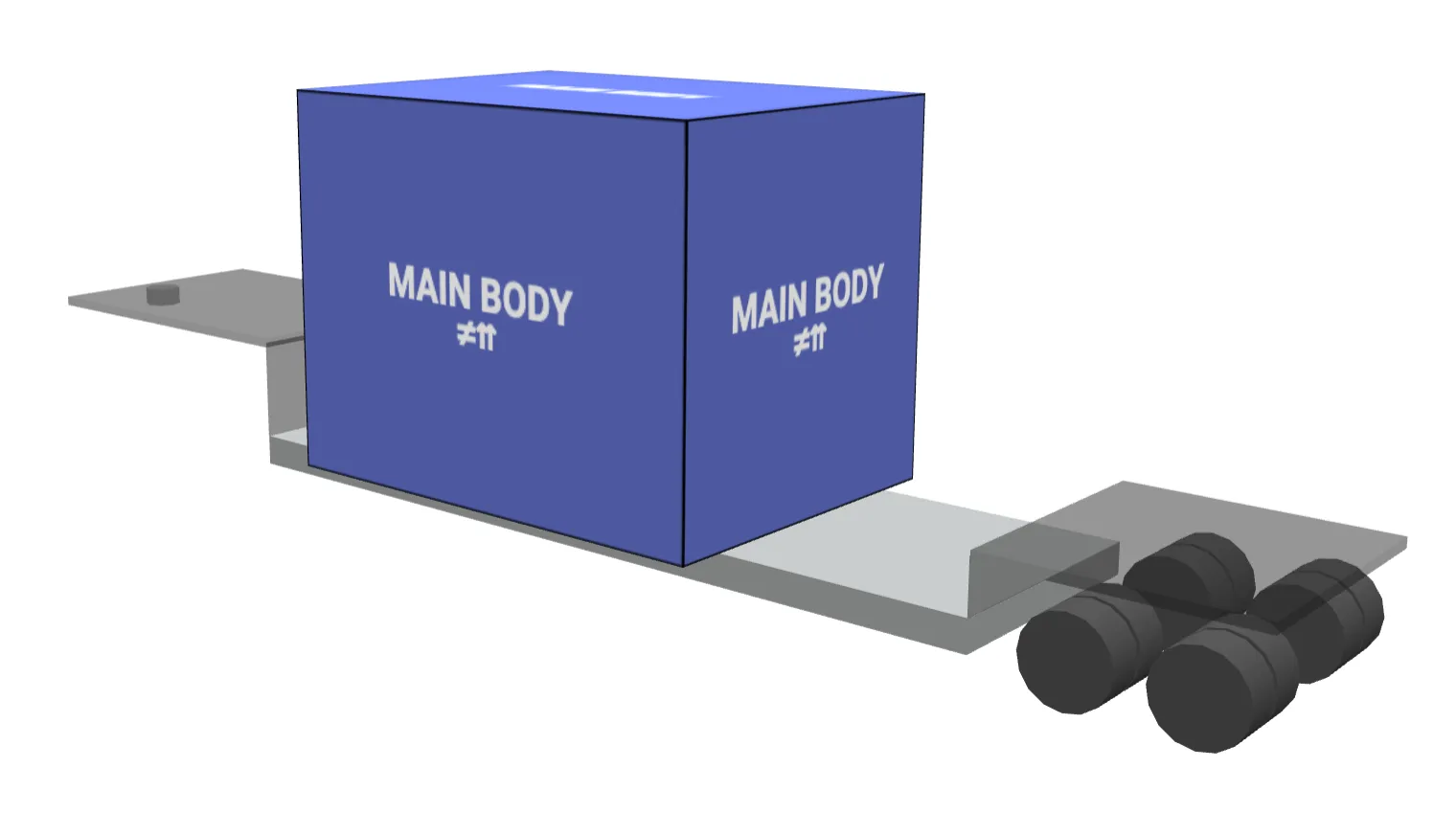
In Cargo-Planner a deck is described by three values per end of the trailer — how far the raised section reaches, how much higher it sits, and whether anything may be stacked on it. Decks span the full width, so there is no width input. Model the trailer once in the equipment library and every plan you build on it inherits the real geometry, including the drop.
Building a step-deck or extendable trailer
Declaring the overhang
Once the deck is settled, you can decide how much the cargo may protrude.
Open equipment gets a 33% out-of-gauge allowance by default, which is enough for routine overhang and not enough for a transformer. For anything you need to state precisely, there are three separate mechanisms, and picking the wrong one is the usual source of confusion:
- Directional max limits on the trailer grant overhang in a given direction by a set distance, for anything loaded on it.
- The Allowed Out of Gauge rule grants named items permission to protrude past named sides — front, rear, or either side — by a stated distance. Use this when only the transformer may overhang and the rest of the consignment may not.
- Max Length With Extension is different in kind. It does not permit overhang; it physically lengthens an extendable trailer for cargo that would not otherwise fit at all.
The distinction that matters: the first two describe cargo hanging past the deck it sits on. The third describes a longer deck. Reach for the extension only when the load genuinely needs more trailer, because the plan then flags the trailer as extended, and that is a different conversation with the permit office.
Where a load can be arranged more than one way, the planner will minimise how many trailers end up out of gauge — which directly reduces the number of permits you have to pull for the same freight.
Fewer trailers out of gauge, fewer permits
Keeping the axles legal
This is the constraint that catches experienced people out, because a truck can be legal on gross weight and illegal on an axle at the same time.
Limits apply per axle group, so where the weight sits matters as much as how much of it there is. Move a single heavy item forward and load transfers off the trailer axles onto the drive axles; the total has not changed and the vehicle is now overweight. Working that out by hand, for every load, is not realistic at volume.
Set the limits for the front and rear axle sets on the trailer and the plan respects them while placing cargo, then reports the resulting weights — gross and net of tare — for each set. Two further fields are worth setting on a project-cargo trailer:
Legal weight is the threshold above which a load counts as a special transport. It has a consequence people miss: if one cargo exceeds it, nothing else is co-loaded on that trailer. That is usually what you want — it stops the planner quietly filling the remaining deck space on a vehicle that is already a permitted move.
Legal height is the road-legal ceiling, which sits below the trailer’s physical maximum height. Non-divisible cargo may be placed between the two. That gap is exactly where a permitted project load lives, and describing it correctly is what stops the planner either refusing a legal load or approving an illegal one.
When the unit is not one trailer
Some moves are not a trailer, they are a vehicle combination — a tractor with two trailers, or a rig whose parts have different deck heights and different axle limits.
Model that as a set: the whole combination becomes one unit that the plan loads across, respecting each part’s own geometry. It is the difference between planning three vehicles that happen to travel together and planning one vehicle that happens to have three parts.
Sequencing the delivery
Project moves are rarely one drop. When the same consignment serves several sites, the densest arrangement is worthless if the first site’s freight is at the headboard behind everything else.
Set a destination on each item and turn on routing, and the plan sequences loading so each stop is reachable in reverse order of delivery — last on, first off. Destinations are matched as text, so anything consistent works: a site name, a stop code, an address. Group everything for one stop under the same string.
Two things to know. Routing takes precedence over cargo priority for load order when it is on. And it sequences by destination grouping rather than computing a route for you — if the stop order itself is the decision, set it deliberately rather than expecting it to be derived.
What the yard and the permit office receive
The plan is only worth what it can be handed to someone as. Two outputs matter on a move like this: loading instructions the yard can follow without improvising, and a document for the permit application showing the dimensions and axle loads you are declaring.
The axle-weight and centre-of-gravity figures can be placed directly into a custom export layout, so the numbers on the permit paperwork are the same numbers the plan was built on rather than something re-typed from a screen.